📌 Context & Overview (संदर्भ)
चांदीपुरा वायरस (CHPV) हाल ही में मध्य और पश्चिमी भारत (विशेष रूप से गुजरात, राजस्थान और महाराष्ट्र) में एक्यूट एन्सेफलाइटिस सिंड्रोम (AES) के मामलों के कारण चर्चा में है।
📊 Quick Factsheet for Exams | परीक्षा उपयोगी फैक्टशीट
| Feature / विशेषता | Details (English) | विवरण (हिन्दी) |
| Discovery / खोज | First isolated in 1965 in Chandipura village (Nagpur district, Maharashtra). | सबसे पहले 1965 में चांदीपुरा गांव (नागपुर, महाराष्ट्र) में खोजा गया। |
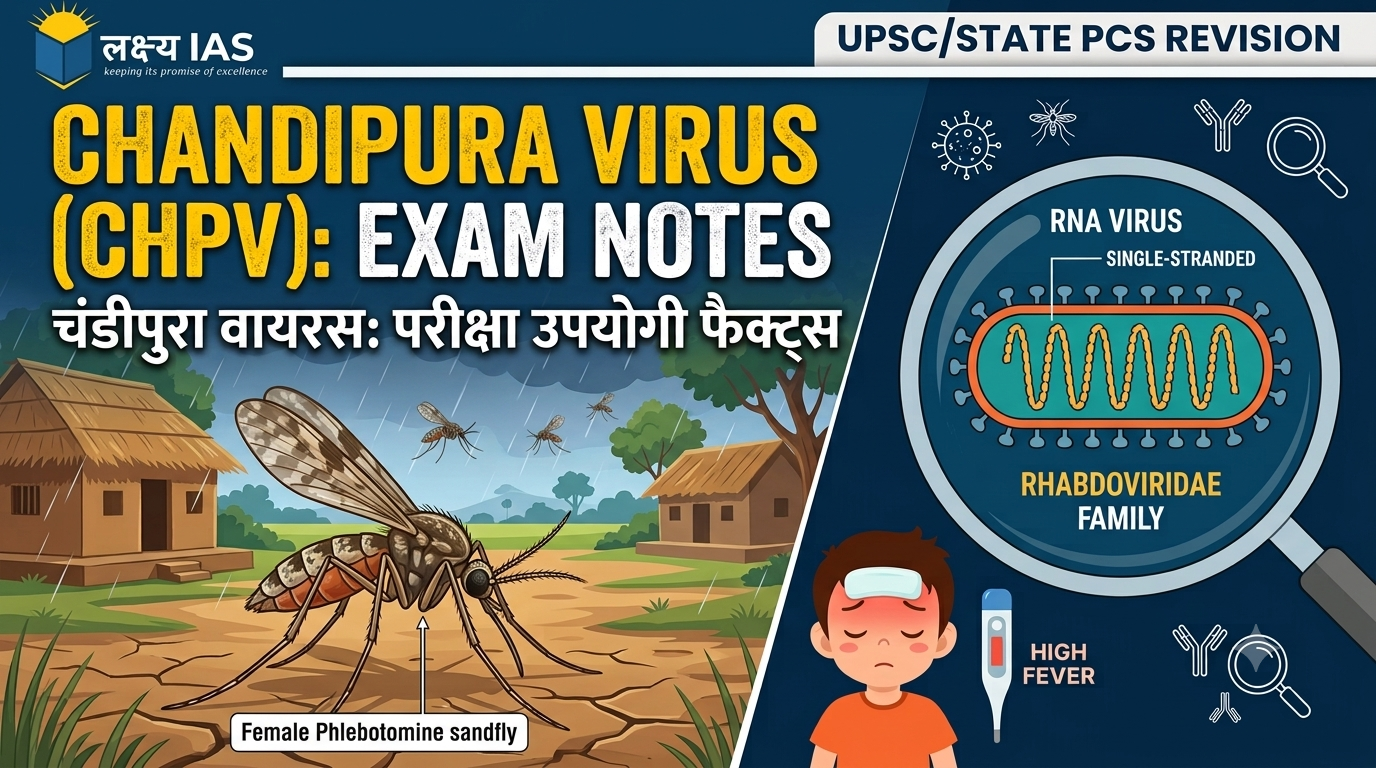
| Virus Family / परिवार | Belongs to Rhabdoviridae family (Genus: Vesiculovirus) — same family as the Rabies virus. | राब्डोविरिडे (Rhabdoviridae) परिवार से संबंधित (रेबीज वायरस का परिवार)। |
| Genome / जीनोम | Single-stranded, negative-sense RNA virus. | सिंगल-स्ट्रैंडेड (एकल-लड़ीदार), नेगेटिव-सेंस RNA वायरस। |
| Primary Vector / वाहक | Female Phlebotomine Sandflies (Phlebotomus papatasi) & mosquitoes (Aedes aegypti). | मादा सैंडफ्लाई (रेत मक्खी) तथा एडीज मच्छर (Aedes aegypti)। |
| Target Group / प्रभावित वर्ग | Primarily targets children under 15 years of age. | मुख्य रूप से 15 वर्ष से कम उम्र के बच्चों को प्रभावित करता है। |
| Human Transmission | NO human-to-human transmission reported. | मानव-से-मानव में संचरण (प्रसार) नहीं होता है। |
| Disease / बीमारी | Causes Acute Encephalitis Syndrome (AES) — brain inflammation. | एक्यूट एन्सेफलाइटिस सिंड्रोम (AES) — मस्तिष्क में गंभीर सूजन। |
| Vaccine / Treatment | No specific vaccine or antiviral drug available; care is entirely supportive. | कोई विशिष्ट टीका या एंटीवायरल दवा उपलब्ध नहीं; केवल लक्षण-आधारित उपचार। |
🔬 Key Clinical & Environmental Features | मुख्य वैज्ञानिक एवं पर्यावरणीय विशेषताएं
- Rapid Onset (तीव्र प्रकोप): Symptoms start with sudden high fever, severe headache, and vomiting, escalating within 24–48 hours to seizures, altered sensorium, and potential brain tissue inflammation.(लक्षण अचानक तेज बुखार, सिरदर्द और उल्टी से शुरू होकर 24-48 घंटों के भीतर दौरे (Seizures) और कोमा तक पहुंच सकते हैं ।)
- Monsoon Peak (मानसून में वृद्धि): Outbreaks peak during monsoon and post-monsoon seasons when sandfly breeding conditions are optimal in rural/tribal regions.(ग्रामीण और आदिवासी क्षेत्रों में मानसून के दौरान सैंडफ्लाई के प्रजनन के लिए अनुकूल परिस्थितियों के कारण इसके मामले बढ़ते हैं ।)
- Genome Mapping Milestone (जीनोम मैपिंग): The Gujarat Biotechnology Research Centre (GBRC) successfully mapped the complete genome of the Chandipura Vesiculovirus.(गुजरात बायोटेक्नोलॉजी रिसर्च सेंटर (GBRC) ने इस वायरस का पूरा जीनोम मैप किया है ।)
🚨 Top 4 UPSC & State PCS Elimination Traps | महत्वपूर्ण परीक्षा ट्रैप्स
Trap 1: Transmission Mode (संचरण मोड)
- The Trap: “Chandipura virus spreads rapidly through airborne droplets and direct human-to-human contact.”
- The Fact: FALSE. It is strictly a vector-borne pathogen transmitted through insect bites (sandflies/mosquitoes). There is no documented human-to-human transmission.
Trap 2: Target Population (लक्षित आबादी)
- The Trap: “Chandipura virus infection primarily causes severe complications among senior citizens above 60 years.”
- The Fact: FALSE. CHPV almost exclusively affects children below 15 years of age due to their developing central nervous system and immune profile.
Trap 3: Treatment & Vaccination (उपचार एवं टीकाकरण)
- The Trap: “A specific WHO-approved antiviral vaccine for CHPV was launched recently for mass immunization.”
- The Fact: FALSE. There is no specific vaccine or targeted antiviral drug available for Chandipura virus. Treatment is entirely symptomatic and supportive.
Trap 4: Origin & Family (उत्पत्ति और परिवार)
- The Trap: “Chandipura virus is a Flavivirus that originated in South America.”
- The Fact: FALSE. It was first isolated in India in 1965 (Chandipura, Maharashtra) and belongs to the Rhabdoviridae family (not Flavivirus).