G20 (Group of Twenty) UPSC & State PCS Quick Revision
Subject: GS Paper II (International Relations) & Current Affairs
📌 At a Glance / एक नज़र में
| Feature | Details |
| Establishment / स्थापना | 1999 (Finance Ministers level); 2008 (Elevated to Leaders’ Summit level) |
| Total Members / कुल सदस्य | 21 (19 Countries + European Union + African Union) |
| Secretariat / मुख्यालय | NO Permanent Secretariat / कोई स्थाई मुख्यालय नहीं |
| Operating Mechanism | Troika (Past, Present & Future Presidencies) |
| Presidency 2023 | India 🇮🇳 (New Delhi Summit) |
| Presidency 2024 | Brazil 🇧🇷 (Rio de Janeiro Summit) |
| Presidency 2025 | South Africa 🇿🇦 (Johannesburg Summit – First in Africa) |
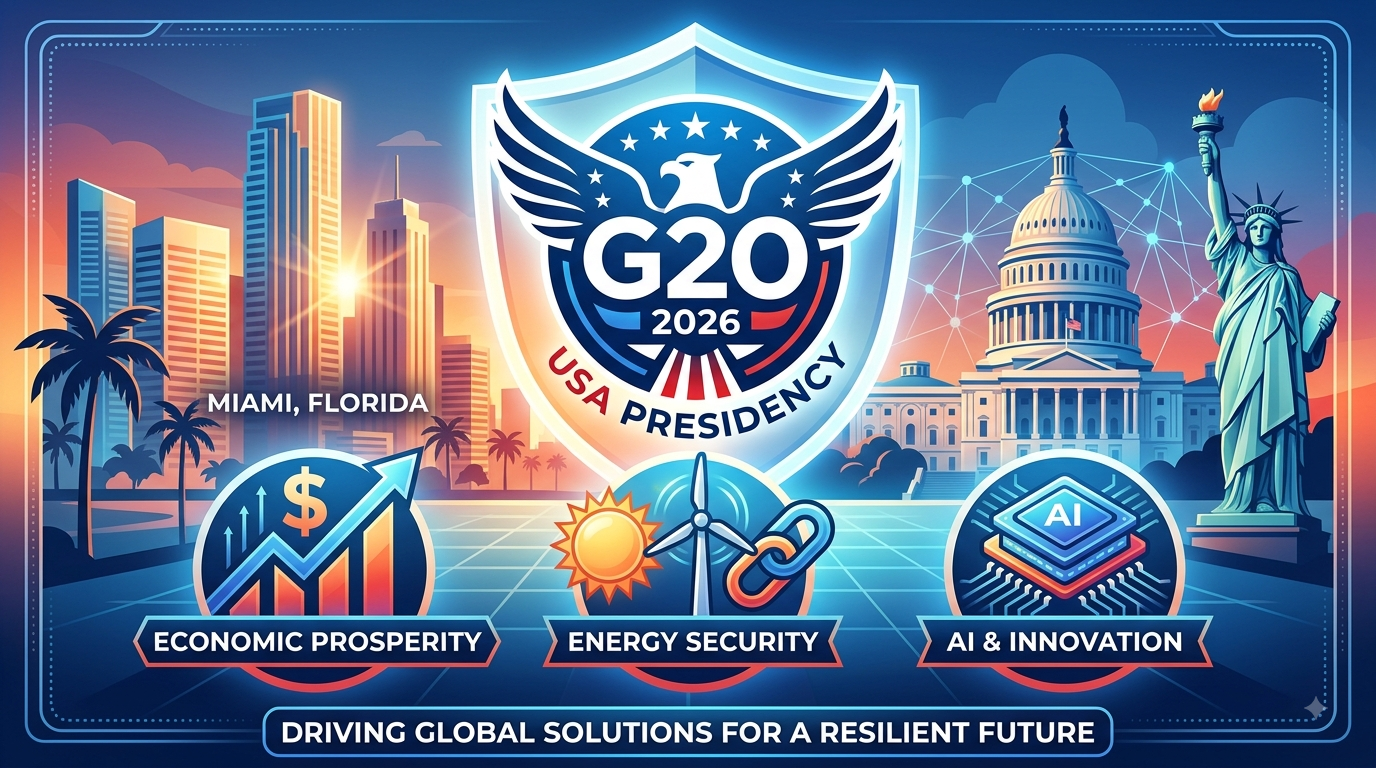
| Presidency 2026 | United States 🇺🇸 (Miami, Florida) |
🏛️ 1. Static Core Concepts (स्थैतिक तथ्य)
🔹 Origin & Evolution (उत्पत्ति एवं विकास)
- 1999: Formed in response to the 1997 Asian Financial Crisis as a forum for Finance Ministers and Central Bank Governors.
- 2008: Upgraded to the level of Heads of State/Government during the Global Financial Crisis to coordinate international economic response.
🔹 Global Economic Weightage (वैश्विक प्रभाव)
- ~85% of global Gross Domestic Product (GDP).
- ~75% of global trade.
- ~2/3rd of the world population.
🔹 Membership Composition (21 Members)
- 19 Individual Nations: Argentina, Australia, Brazil, Canada, China, France, Germany, India, Indonesia, Italy, Japan, Mexico, Russia, Saudi Arabia, South Africa, South Korea, Türkiye, UK, USA.
- 2 Regional Blocs: European Union (EU) + African Union (AU)(AU was formally inducted as the 21st permanent member during India’s 2023 New Delhi Summit).
🔹 Working Structure (कार्यप्रणाली)
The G20 operates without a central secretariat and is organized into two primary streams:
- Finance Track (वित्त ट्रैक): Led by Finance Ministers and Central Bank Governors; handles fiscal policies, international financial architecture, and taxation.
- Sherpa Track (शेरपा ट्रैक): Led by emissaries (Sherpas) of national leaders; handles non-financial issues like climate change, energy transition, health, and agriculture.
🔄 2. The Troika & Summit Progression (हालिया घटनाक्रम)
The host country manages administrative duties alongside the previous and next hosts through the Troika mechanism:
- 🇮🇳 2023 Summit (India): Theme: “Vasudhaiva Kutumbakam” (One Earth, One Family, One Future). Key deliverables: AU inclusion, Global Biofuel Alliance, IMEC Corridor.
- 🇧🇷 2024 Summit (Brazil): Priority areas included social inclusion, combatting hunger (Global Alliance against Hunger & Poverty), and global governance reform.
- 🇿🇦 2025 Summit (South Africa): Theme: “Solidarity, Equality, Sustainability” — Landmark milestone marking the first G20 summit hosted on African soil.
- 🇺🇸 2026 Summit (USA): Hosted in Miami, Florida — Key focus areas include artificial intelligence (AI) governance, supply chain security, and global trade growth.
🛑 3. UPSC Prelims Traps & Elimination Rules (परीक्षा उपयोगी ट्रिक्स)
❌ Trap 1: “G20 has its permanent headquarters in Geneva or Washington D.C.”
Fact:FALSE. G20 has no permanent secretariat or headquarters. The presiding nation manages the secretariat during its tenure.
❌ Trap 2: “G20 summit declarations are legally binding treaties on member countries.”
Fact:FALSE. Decisions are non-binding political commitments.
❌ Trap 3: “All G7 countries are members of G20.”
Fact:TRUE. All G7 countries (USA, UK, Canada, France, Germany, Italy, Japan + EU) are part of the G20.
❌ Trap 4: “Spain and Singapore are permanent G20 member countries.”
Fact:FALSE. Spain is a permanent invitee, and Singapore is a regular invited guest country, not a permanent member.
4. Aim & Objectives of G20
The G20’s primary mandate focuses on economic cooperation, but its agenda has significantly expanded:
- Ensuring Global Economic Stability: Coordinating policies to prevent financial crises and promote sustainable global economic growth.
- Enhancing Financial Regulations: Strengthening international financial architecture and oversight of financial institutions.
- Promoting Sustainable Development: Addressing challenges to achieving Sustainable Development Goals (SDGs).
- Addressing Global Challenges: Collaborating on interconnected issues like climate change, energy transition, health, digital economy, and corruption.
Shortcomings & Challenges
While influential, G20 faces significant criticism:
- Geopolitical Tensions & Lack of Consensus: Intense rivalry between major powers (e.g., US-China relations, Russia-Ukraine conflict) often hinders practical decision-making.
- Enforcement: G20 decisions are non-binding; there is no practical mechanism to enforce commitments made by members.
- Lack of Inclusivity (Historically): Critically, it has long been seen as a “rich country club,” lacking genuine representation of the entire developing world (though AU induction aims to address this).
- Focus on Specific Interests: Critics argue that it primarily serves the economic interests of its most powerful members.
Way Forward
- Prioritize Pratical Solutions: Shift focus from grand declarations to tangible, actionable solutions for global challenges.
- Strengthen Inclusivity: Build on the AU induction by ensuring consistent prioritization of the developmental concerns of the entire Global South.
- Reform Global Bodies: Play a constructive role in reforming and making global governance institutions (like the UN, WTO, IMF) more equitable and practical.
- Promote Cooperative Action: Foster genuine dialogue to overcome geopolitical rivalries and enable practical cooperation on shared global risks.